St Mark’s and the acqua alta
Part of St Mark’s lies lower than the square in front of it, and the sea gets in. The tides of 2018 and 2019 soaked its marble with salt and reached the crypt; since then a glass barrier has gone up in the Piazza, the rear has been sealed and the narthex restored. This is what the Basilica’s guardians have published about the water, and what it means for a visit.
Why the sea gets in
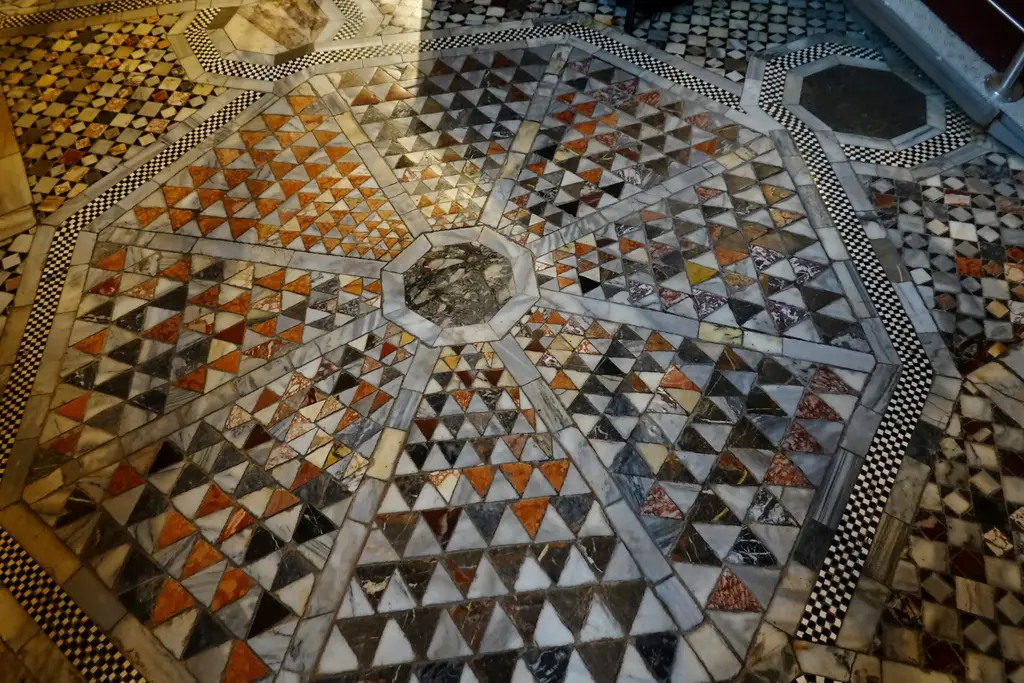
Its narthex, the atrium you cross first, has a floor lower than Piazza San Marco, so it is among the first places the tide reaches; behind the church, on the Rio della Canonica, the ground is so low that, the Procuratoria wrote in 2025, seawater began entering the basements as soon as the tide passed 70 centimetres, and reached the crypt.
The damage is not only the water you see. Salt water rises by capillarity into the brick and marble, and as it dries the salts crystallise and dissolve again in cycles, breaking the material apart from within. Each tide, the Procuratoria explained, widens the paths by which the next one gets in.
2018 and 2019
On 29 October 2018 a tide exceptional in height and length flooded the Basilica, and others followed in the days after. The Procuratoria wrote that it had pushed salt water higher into the walls than before and soaked structures rarely reached. It estimated about €2.7 million for the first urgent works, said it was ready to spend some €700,000 of its own, and asked the Italian government for the remaining €2 million.
The worse came with the acqua granda of 2019: the water entered the crypt through its windows. The narthex was among the most damaged parts of the church and needed a long and delicate treatment to draw out the salt; the Ministry of Culture paid for the work, which the Procuratoria said in March 2025 would end that year.
The defences
- The glass barrier. A glass wall in Piazza San Marco now protects the front and the side of the Basilica from high tides. In February 2025 the Procuratoria, the public works authority and the Consorzio Venezia Nuova signed an agreement on running it.
- The rear. In April 2025 the Procuratoria finished more than a year of work, paid from its own funds, to waterproof the basements of the Basilica and the Patriarch’s Palace on the Rio della Canonica side, with internal bulkheads and watertight doors and windows. It called this the piece that completes the protection of the whole Basilica.
Restoration and works
Other works the Procuratoria has announced:
- The roofs. Restoration of the roof pitches began in January 2025.
- The Campanile lift. The bell tower reopened on 3 March 2025 after its lift was overhauled, with a winch more than seventy years old replaced, and the bronzes and the bells cleaned.
- The Ateneo San Basso. The small building beside the Basilica, on the Piazzetta dei Leoncini, is being refitted so that the info point and the shop can move out of the narthex, which will then be left free of fittings. The Procuratoria first expected it to open in 2026; in July 2026 the local press reported that the work will end in July 2027, and the First Procurator said the Ateneo will offer information and help but no ticket office, as tickets stay online only. The free bag deposit that used to be there closed in December 2023 — see bags and entry rules.
Visiting when the tide is high
The access rules say that when acqua alta reaches the narthex, the Procuratoria sets out alternative routes, signposted and staffed, and asks visitors to follow the raised walkways and the custodians’ directions. The rest of the visit is on how to visit.
Who looks after the Basilica
The Procuratoria di San Marco is the fabbriceria of the cathedral: the body responsible for protecting, maintaining and restoring the Basilica, the Campanile and their annexes. Its name was given by a royal decree of 9 July 1931, in memory of the Procurators of Saint Mark, one of the great offices of the Venetian Republic (the history page explains their role). It is governed by a council of seven Procurators, who elect a president, the Primo Procuratore; in 2018 it described itself as appointed by Italy’s Minister of the Interior under the agreements between the State and the Catholic Church.
The council names the Proto di San Marco, an engineer or architect who directs the technical services and the Basilica’s own craftsmen, keeping the building in line with the needs of worship. Since 2005 the Procuratoria has belonged to the Association of Italian Fabbricerie, which brings together the bodies that run Italy’s great cathedrals.
Frequently asked questions
Does St Mark’s Basilica flood?
It has. The narthex floor is lower than Piazza San Marco, and the exceptional tides of 29 October 2018 and of 2019 flooded it; in 2019 water came into the crypt through its windows.
Is the Basilica protected from high water now?
A glass barrier in Piazza San Marco guards the front and side, and in April 2025 the Procuratoria finished sealing the basements on the Rio della Canonica side. It described this as completing the protection of the whole Basilica.
Can I visit during acqua alta?
The access rules say that when high water reaches the narthex, the Procuratoria sets out signposted, staffed alternative routes; visitors follow the raised walkways and the custodians.
Who looks after St Mark’s Basilica?
The Procuratoria di San Marco, the body responsible for protecting, maintaining and restoring the Basilica, the Campanile and their annexes. Its technical work is directed by the Proto di San Marco, an architect or engineer.
Last checked: October 1, 2026